
Material Guides for Stainless Steel, Nickel Alloys and Special Alloys
Compare material families, grade references, standards, certificates, and product forms before preparing an RFQ for industrial fasteners, custom metal parts, and drawing-based components.
Material availability, suitability, and substitution should be confirmed according to the applicable standard, drawing, service environment, certificate requirement, and project need.
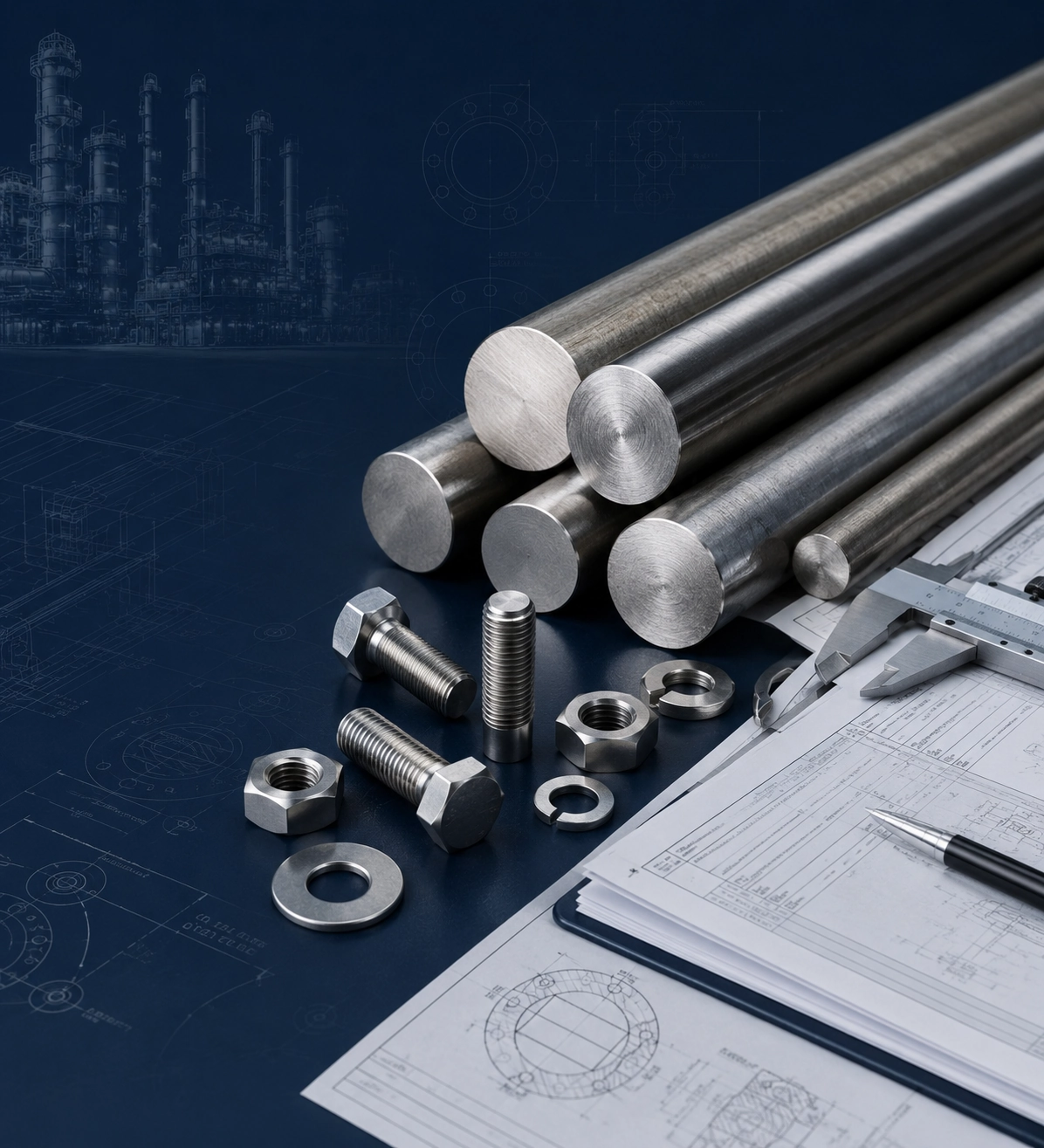
Start With Material Family Selection Before Sending an RFQ
Before requesting a quotation, buyers should confirm the material family, grade, standard, product form, heat treatment condition, surface condition, and document requirements. These details help clarify whether the request concerns raw material, fastener material, a machined component, or a drawing-based part.
WISINE can review RFQ details against material family, grade reference, product form, size, tolerance, certificate requirement, and final application. Material selection should not be treated as direct replacement unless the drawing, standard, mechanical requirements, corrosion environment, and certificate needs are technically reviewed.
Buyer Information to Prepare
- Material family, grade, UNS, EN, ASTM, or project designation
- Product form, size, tolerance, quantity, and surface condition
- Standard, heat treatment condition, and certificate requirement
- Drawing, sample, or application environment when available
Browse Material Families for RFQ Preparation
Start with the material family before selecting a grade. Stainless steel, nickel alloys, duplex stainless steel, alloy steel, precipitation hardening stainless steel, titanium, and special metals may be reviewed for different corrosion, strength, temperature, machining, certificate, and project-document requirements.
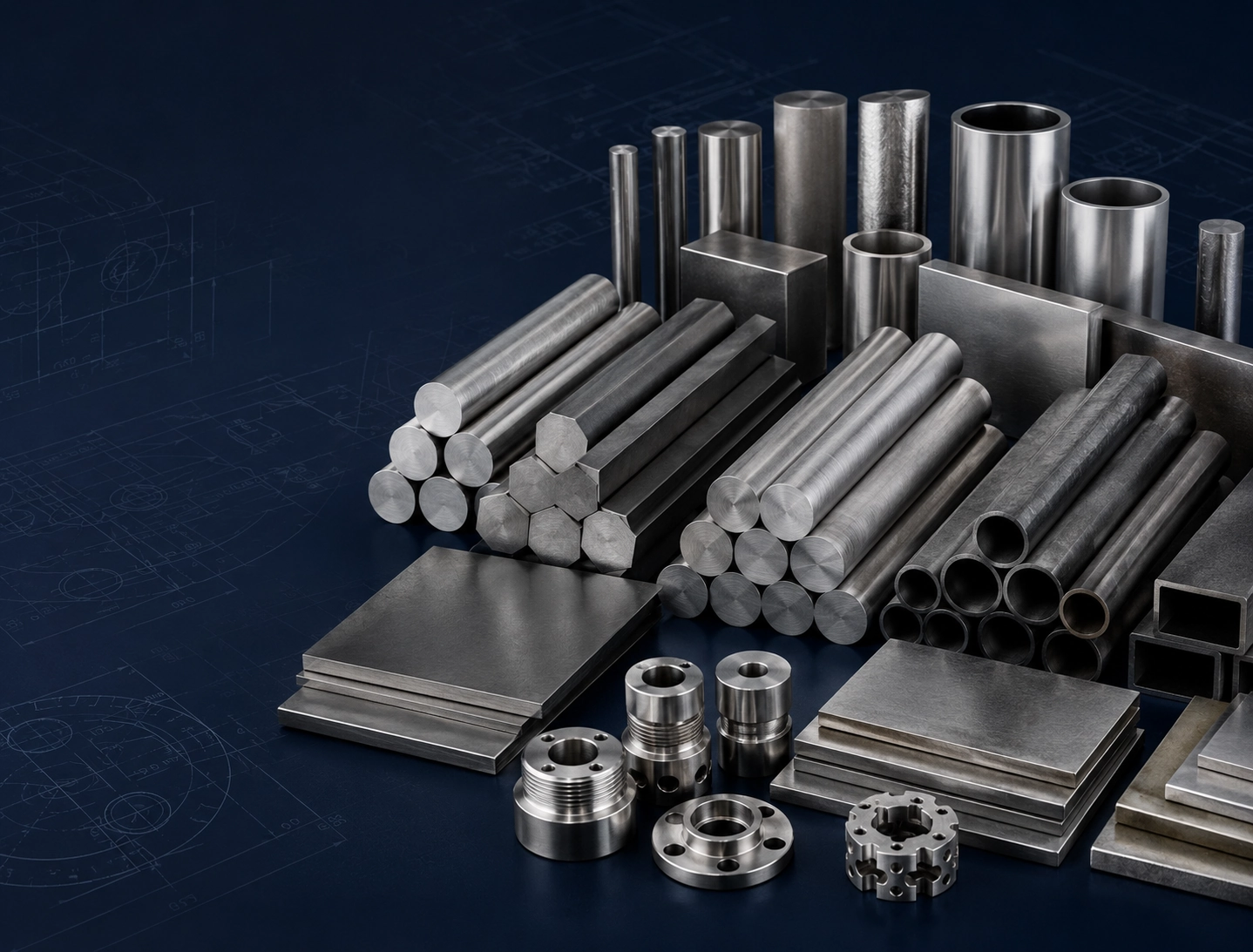
Stainless Steel
Useful for many fastener, component, and hardware RFQs where corrosion resistance, standards, surface condition, and certificate requirements should be confirmed.
Nickel Alloys
Reviewed for project-specified corrosion, temperature, or equipment requirements where grade, product form, and documents must be checked carefully.
Duplex / Super Duplex Stainless Steel
Reviewed where duplex or super duplex grades are specified by drawings, standards, procurement documents, or application conditions.
Alloy Steel
Used in bolting and industrial component discussions where mechanical requirements, temperature requirements, coating, and certificates should be confirmed.
Precipitation Hardening Stainless Steel
Reviewed where grade, heat treatment condition, strength requirement, drawing note, and inspection requirements are important to the quotation.
Titanium / Special Metals
Reviewed for drawing-based or project-specified requirements where material availability, product form, standard, and certificate needs should be confirmed early.
Popular Material Grade References
Use common grade references to prepare RFQ details, not as automatic substitutes. Final material selection should be reviewed according to project specification, service environment, drawing notes, product form, and certificate requirements.
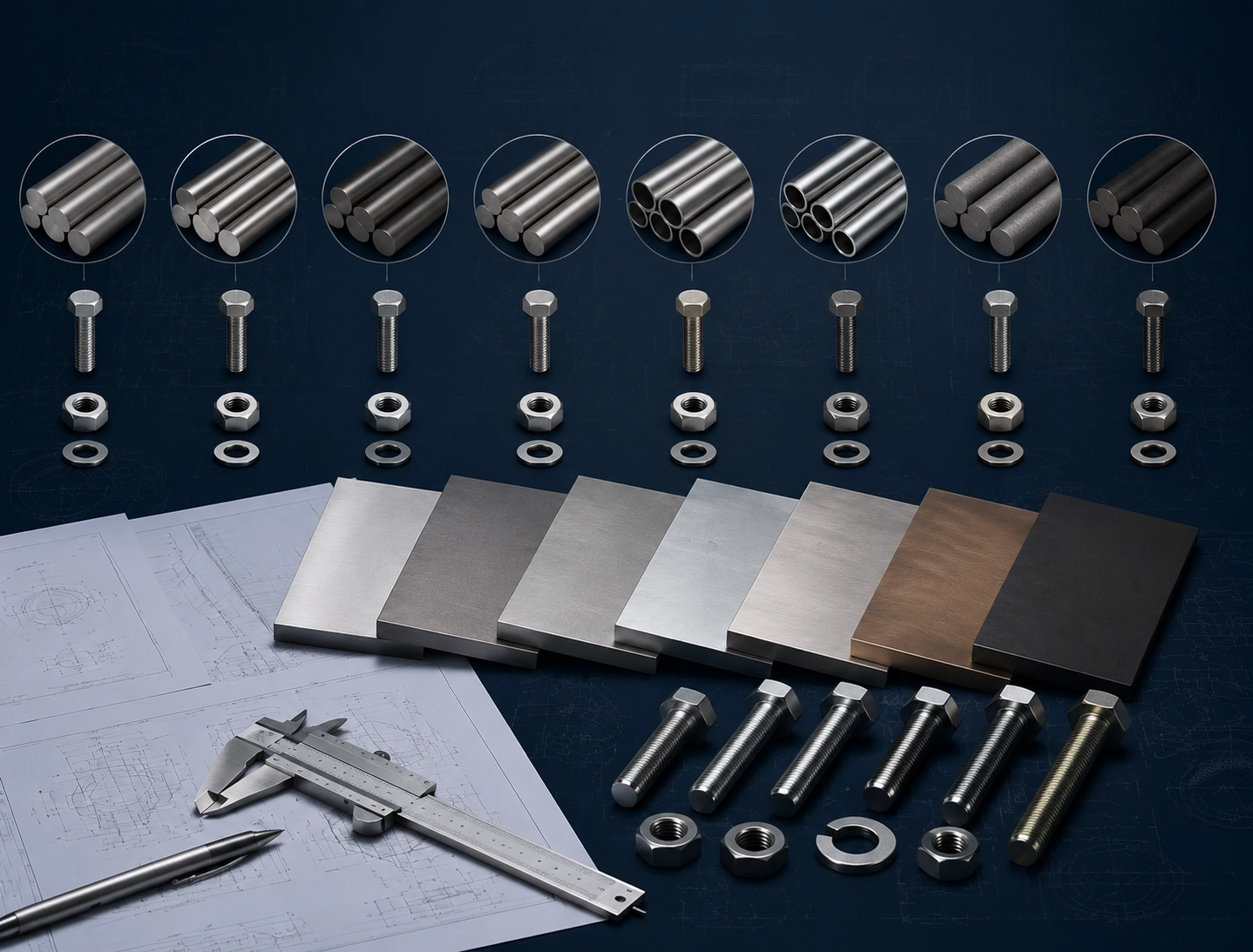
Stainless Steel References
316 / 316L, ASTM A193 B8 / B8M, and project-specified stainless grades may be reviewed for fasteners, anchors, hardware, and custom parts.
Nickel Alloy References
Hastelloy C276, Inconel 625, Inconel 718, and related nickel alloys should be reviewed according to grade, standard, product form, and project requirement.
Duplex Grade References
Duplex 2205 and super duplex 2507 may be discussed where the project specifies duplex stainless steel and the service environment is provided.
Alloy Steel References
ASTM A193 B7 / B7M and ASTM A320 L7 / L7M should be confirmed according to standard, coating, temperature requirement, and certificate needs.
PH Stainless References
17-4PH / SUS630 and related PH stainless grades should be reviewed with heat treatment condition, dimensions, drawing requirements, and inspection notes.
Titanium and Special Metal References
Titanium and special metals should be reviewed according to grade, product form, standard, quantity, processing requirements, and document requirements.
Do Not Replace Material Grades Without Technical Review
Material substitution should not be assumed from a similar trade name, family name, or corrosion description. Before one grade is considered as an alternative to another, the request should be checked against the material standard, UNS / EN / ASTM grade, mechanical properties, corrosion environment, heat treatment condition, drawing requirement, certificate requirement, and final application.
For RFQs involving fasteners, facade hardware, marine-adjacent environments, chemical service, temperature-related equipment, or project-specific specifications, substitution should be confirmed through technical review before quotation or production discussion.
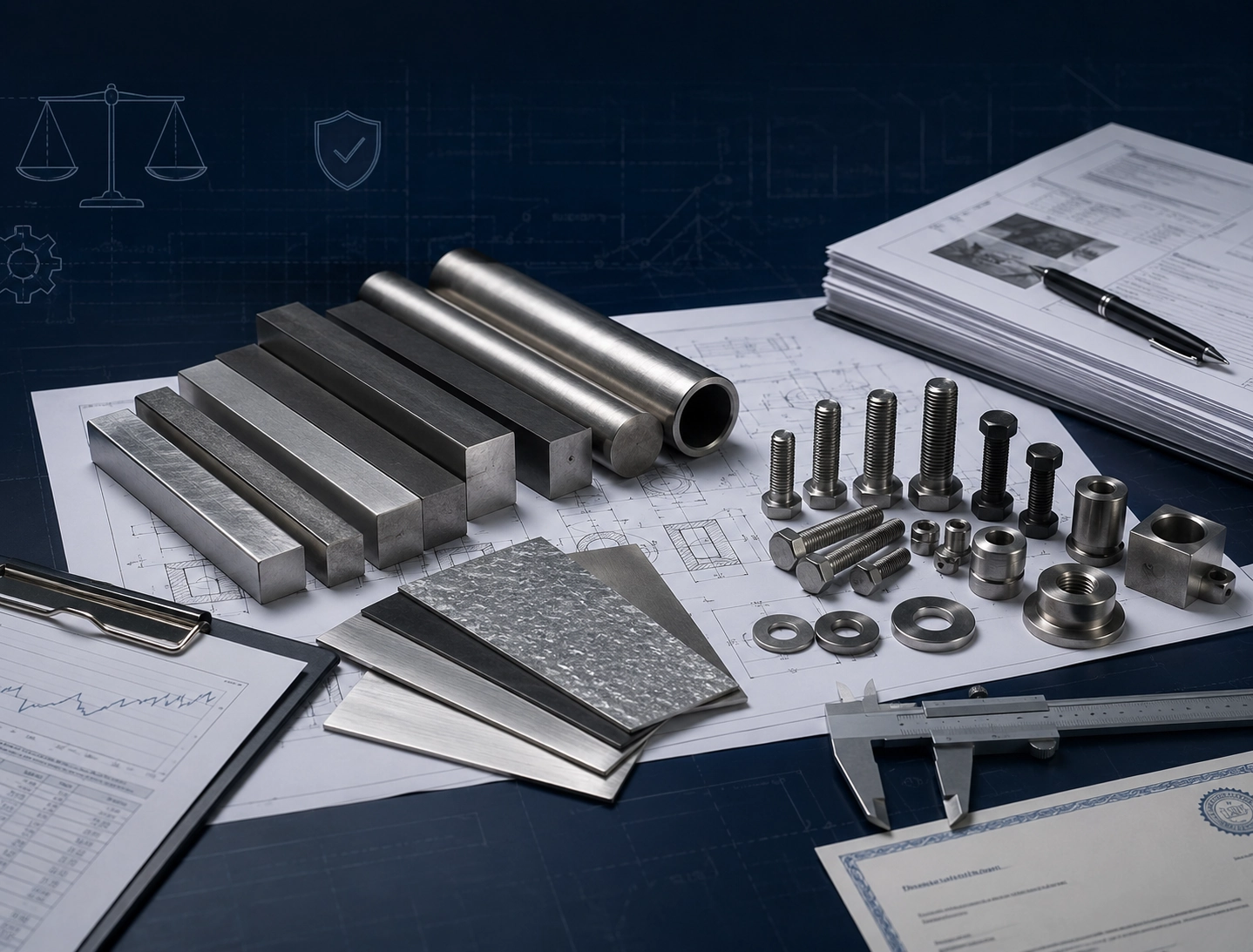
What Buyers Should Confirm Before Requesting a Material Quote
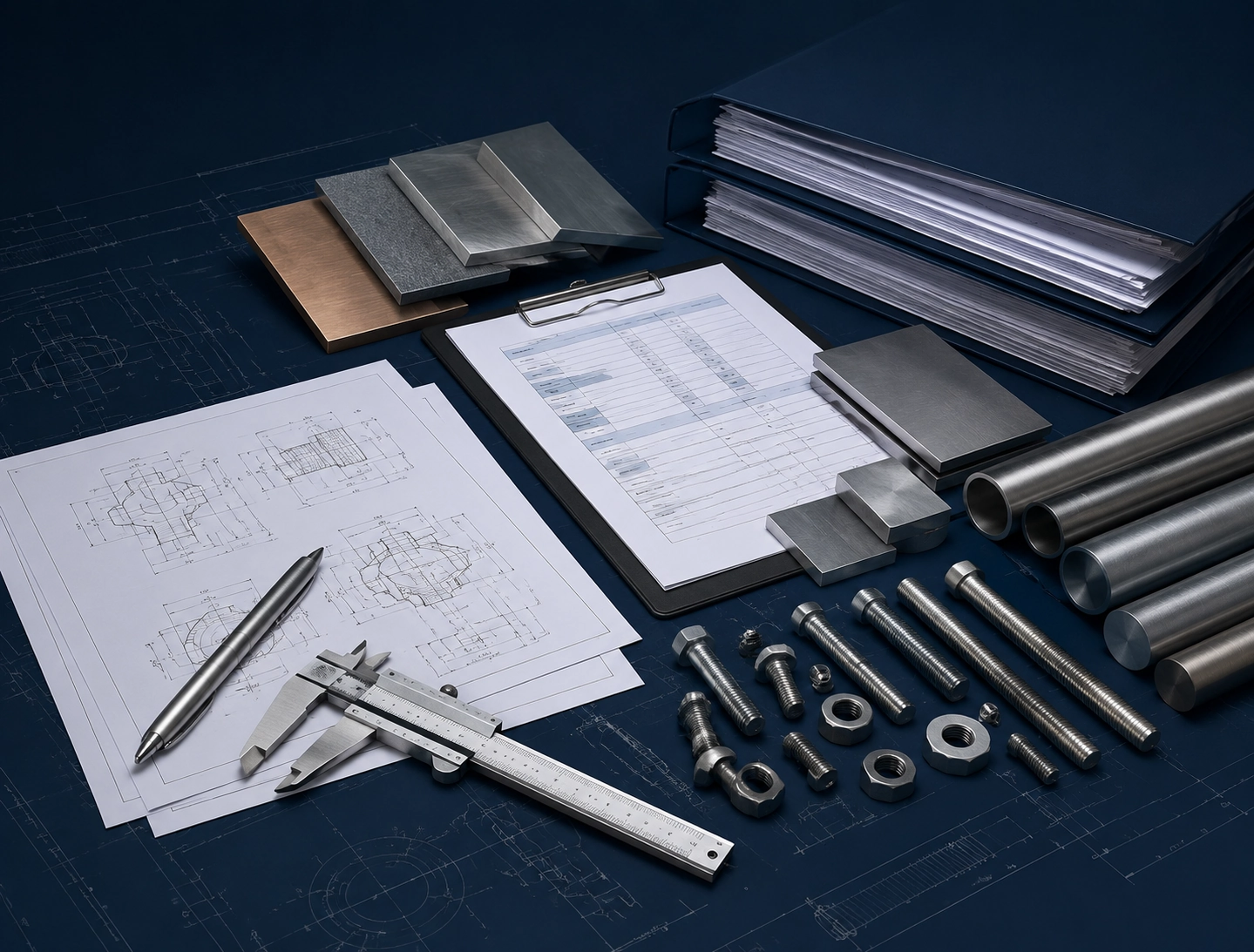
Complete RFQ details help reduce clarification cycles. If a drawing is available, it should be sent with the material grade, standard, size, tolerance, quantity, and certificate requirements so that the quotation can be reviewed more accurately.
| RFQ Item | What to Confirm |
|---|---|
| Material grade | Material family, grade, UNS, EN, ASTM, or project-specified designation. |
| Product form | Bar, plate, tube, wire, fastener, machined part, or drawing-based part. |
| Standard and condition | Standard, specification, heat treatment condition, and surface condition when required. |
| Size and quantity | Dimensions, tolerance, quantity, and project delivery requirement for quotation review. |
| Documents | Certificate requirement, EN10204 3.1 / 3.2 need, drawing, sample, or inspection requirement. |
| Application environment | Marine-adjacent, chemical, high-temperature, low-temperature, structural, or project-specific environment where relevant. |
Materials for Fasteners and Drawing-Based Parts
WISINE material discussions may support fasteners, stud bolts, threaded rods, bolts, nuts, washers, anchors, custom CNC parts, bars, tubes, plates, wires, and drawing-based components. Material form and availability should be confirmed according to grade, size, standard, quantity, and project requirement.
Fastener Materials
Stud bolts, threaded rods, bolts, nuts, washers, and anchors should be reviewed with material grade, fastener standard, dimensions, coating or finish, and certificate needs.
Drawing-Based Components
CNC parts, custom alloy components, brackets, facade hardware, and special metal parts should be reviewed with drawings, tolerances, material notes, and quantity.
Raw and Processed Forms
Bars, tubes, plates, wires, cut pieces, and processed forms should be confirmed according to grade, size, standard, quantity, and document requirements.
Document Requirements Should Be Confirmed Early
Material quotation requirements should identify whether the project needs a material test certificate, EN10204 3.1 certificate, EN10204 3.2 certificate, third-party inspection, standard compliance review, heat number traceability, drawing confirmation, packing document, or shipping document.
Document availability and inspection requirements should be confirmed before quotation because certificate type, inspection scope, and traceability requirements may affect sourcing, production review, and lead-time discussion.
Prepare Material Details Before Sending an RFQ
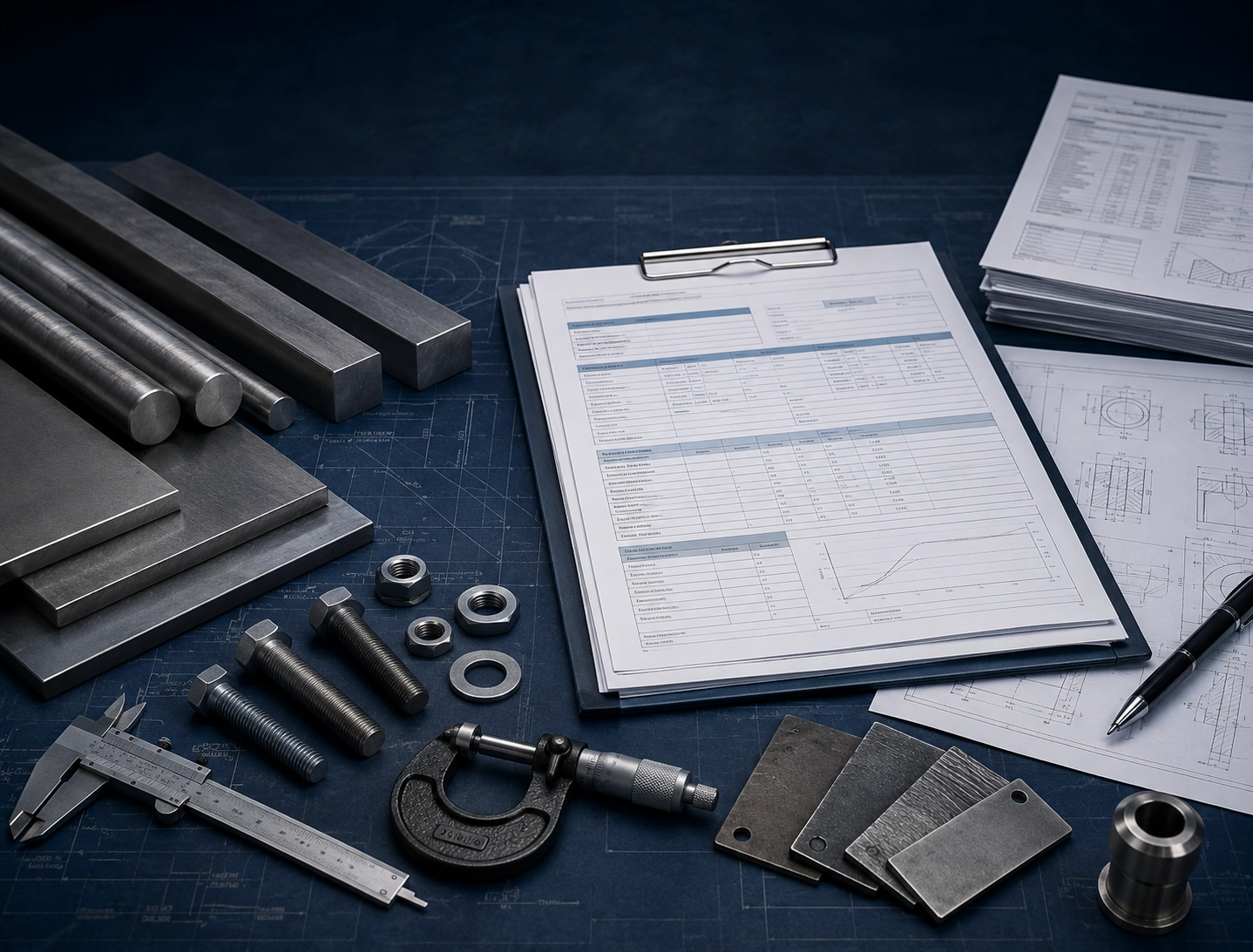
Before sending an RFQ, prepare the material family, grade, standard, product form, size, tolerance, quantity, certificate requirement, and drawings or samples. This helps WISINE review whether the request concerns material supply, fastener production, or drawing-based custom parts.
Prepare Technical Details
Organize material grade, product form, size, tolerance, standard, quantity, certificate requirement, and application notes before inquiry.
Send Drawing for Review
Use the drawing-based RFQ path when dimensions, tolerances, machining, custom fasteners, or project-specific components need quotation review.
Review Certificate Requirements
If the project requires EN10204 3.1, EN10204 3.2, MTC, traceability, or third-party inspection, confirm those requirements before quotation.
Material Guides and RFQ FAQ
Can WISINE help compare stainless steel and nickel alloys?
Yes. WISINE can help review stainless steel, nickel alloy, duplex stainless steel, alloy steel, precipitation hardening stainless steel, titanium, and special metal options according to grade, standard, product form, drawing, service environment, and certificate requirement.
Can one material grade replace another?
Material replacement should not be assumed without technical review. Grade substitution should be checked against the material standard, UNS / EN / ASTM designation, mechanical properties, corrosion environment, heat treatment condition, drawing requirement, certificate requirement, and final application.
What documents are needed for material quotation?
Common quotation documents may include the material grade, standard, drawing, size, tolerance, quantity, product form, certificate requirement, and application environment. If EN10204 3.1 or EN10204 3.2 certification is required, that requirement should be stated before quotation.
What is the difference between EN10204 3.1 and 3.2?
EN10204 3.1 is generally a manufacturer-issued inspection certificate based on product-specific inspection. EN10204 3.2 normally involves additional third-party or independent inspection confirmation when required by the project. The exact certificate requirement should be confirmed from the applicable specification or buyer requirement.
Can WISINE supply materials for fasteners and custom parts?
WISINE can discuss material requirements for fasteners, threaded rods, stud bolts, bolts, nuts, washers, anchors, CNC parts, bars, tubes, plates, wires, and drawing-based components. Material form and availability should be confirmed according to grade, size, standard, quantity, and project requirement.
Should drawings be sent before quotation?
Drawings are recommended when the RFQ involves dimensions, tolerances, machining, special fasteners, custom metal parts, facade hardware, or application-specific requirements. Drawings help confirm material, form, size, tolerance, certificate, and production review needs before quotation.
Need Material Review for Fasteners, Custom Parts or Drawing-Based Components?
Share your material grade, product form, size, quantity, standard, certificate requirement, drawing, and application environment. WISINE can support quotation preparation for stainless steel, duplex stainless steel, nickel alloys, alloy steel, PH stainless steel, titanium, and special metal requirements.